


ABOUT THE GAME
About Sudoku Brain Blocks
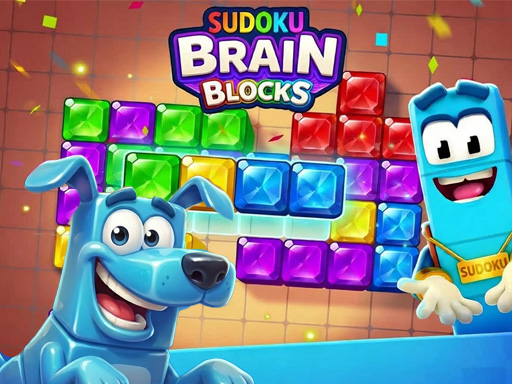
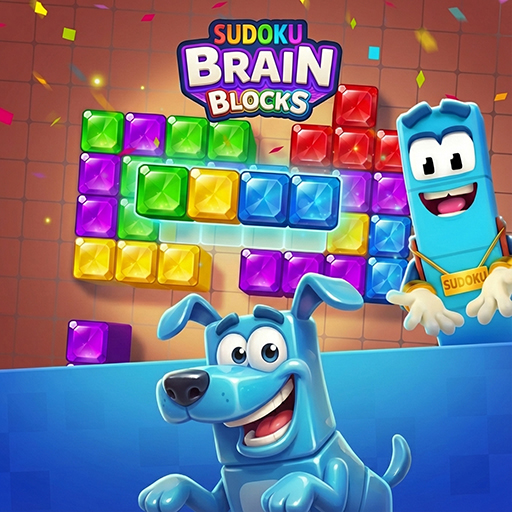
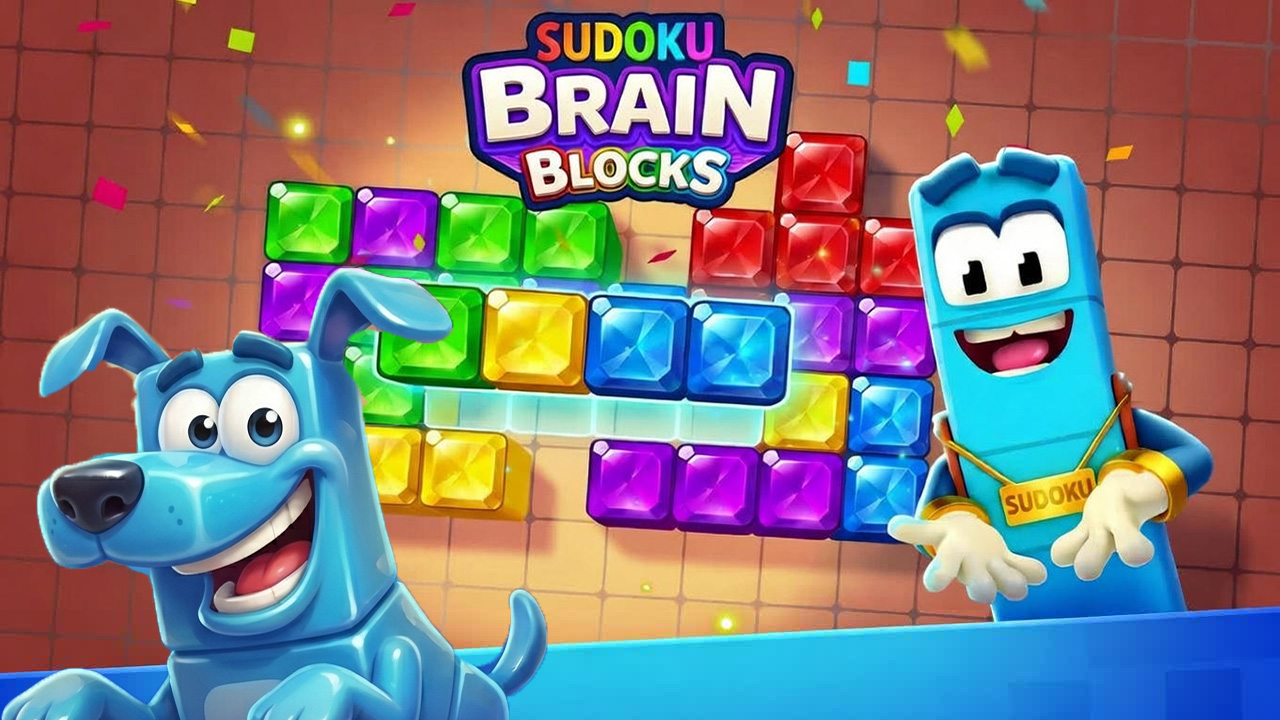
Sudoku Brain Blocks is a relaxing yet addictive online puzzle game that blends classic Sudoku logic with block-fitting challenges (Tetris style). Drag and drop various shaped blocks onto a 9×9 grid to complete full rows, columns, or 3×3 squares to clear the board and earn high scores. Use strategy and planning to avoi…
QUICK FACTS
- Category
- Puzzle
- Platform
- Browser (PC & mobile)
- Control
- Look at the available block shapes below or beside the grid.
- Orientation
- Landscape
- Developer
- BestGamesFreePlay.com
CONTROLS
Control
Look at the available block shapes below or beside the grid.
Control
Click and drag a block onto the 9×9 grid, positioning it where it fits without overlapping any existing blocks.
Control
Your objective is to complete full rows, columns, or 3×3 sub-grids - when an entire line or box is filled with block pieces, it clears and you earn points.
Control
Try to position blocks so that a single placement completes multiple lines at once for bonus points.
SCREENSHOTS
In-Game Screenshots
Why Sudoku Brain Blocks Keeps Pulling Players Back
Sudoku Brain Blocks is a clever hybrid that takes two puzzle giants - the number logic of Sudoku and the spatial placement of Tetris-style blocks - and fuses them into one board. You receive various shaped blocks and place them on a 9×9 grid, and your goal is to complete full rows, columns, or 3×3 sub-grids, which clear and award points. It is relaxing, strategic, and surprisingly addictive.
The appeal is the hybrid design. Sudoku players recognize the 9×9 grid and the satisfaction of completing a line; block puzzle players recognize the Tetris-shaped pieces and the tension of fitting them together. The fusion creates something neither genre offers alone: you are managing space like a block puzzler while planning completions like a Sudoku solver, and the two skill sets reinforce each other.
It is also a game designed for flow. The drag-and-drop placement is smooth, the clear animations are satisfying, and the lack of a timer means the only pressure is the board itself. The game ends when no remaining block can fit, which creates a gentle, natural tension - you are never rushed, but you are always aware of the space running out.
What a High-Scoring Board Looks Like
A high-scoring board in Sudoku Brain Blocks is one where placements create cascades. The loop is: read the available blocks, plan placements that complete lines, clear rows, columns, or boxes for points, and keep the board open enough for the next blocks.
| Phase | What is happening | What to plan |
|---|---|---|
| Read | The available blocks | Which shapes fit where |
| Place | Drag a block onto the grid | Position for future clears |
| Clear | A full line or box | Points and freed space |
| Combo | Multiple clears at once | The high-score key |
| Survive | The board stays open | The game ends when nothing fits |
The key to high scores is multi-line clears. A single placement that completes a row and a column simultaneously - or a row, column, and box - pays out combo bonuses that single clears never match. Planning for those simultaneous completions is the difference between a decent score and a great one.
Dragging, Placing, and Clearing Lines
The controls are accessible: look at the available block shapes below or beside the grid, then click and drag a block onto the 9×9 grid, positioning it where it fits without overlapping any existing blocks. Complete full rows, columns, or 3×3 sub-grids to clear them and earn points.
| Control | Action | When it matters |
|---|---|---|
| Click | Select a block | Choosing the shape |
| Drag | Move it to the grid | Positioning the placement |
| Drop | Commit the block | Filling the space |
| Clear | A completed line or box | The scoring moment |
The placement rule is the game’s strategic core: blocks cannot overlap existing pieces, which means every placement consumes space. The art is placing blocks so that the space they consume is exactly the space that completes a line - turning every move into progress.
Techniques That Turn a Board Into a Cascade
- Plan for simultaneous clears. A placement that completes two lines at once is worth far more than two separate clears.
- Keep the center fluid. The 3×3 boxes need attention - a blocked center box kills combo opportunities.
- Fill edges deliberately. Edge lines are easier to complete but harder to clear once filled.
- Watch the block queue. The shapes you receive determine your strategy - adapt placement to what is coming.
- Prioritize space. When the board tightens, clearing space matters more than chasing combos.
Mistakes That Fill the Board
The most common mistakes in Sudoku Brain Blocks come from short-term thinking. Placing blocks to complete a quick line while ignoring the board’s overall shape fills the grid faster than it clears. Focusing on rows while neglecting the 3×3 boxes strands large areas. And hoarding a block too long, hoping for the perfect spot, lets the queue run out of options.
| Mistake | Why it ends the game | The fix |
|---|---|---|
| Quick-line tunnel vision | Board fills unevenly | Balance rows, columns, and boxes |
| Ignoring the boxes | Stranded regions | Plan all three clear types |
| Hoarding blocks | Missed placements | Use blocks while they fit |
| Neglecting the queue | No plan for what’s next | Adapt to the incoming shapes |
The Endless Challenge of the 9×9
Sudoku Brain Blocks is effectively endless - there is no timer and no fail state until the board fills. That structure makes it perfect for both relaxation and high-score chasing: play calmly to unwind, or plan aggressively to push your score higher. The hybrid of spatial placement and completion planning gives the game a depth that pure block puzzles lack, and the combo system rewards the player who thinks in cascades. Master the balance between filling space and clearing it, and the 9×9 grid becomes a satisfying, endless puzzle.